
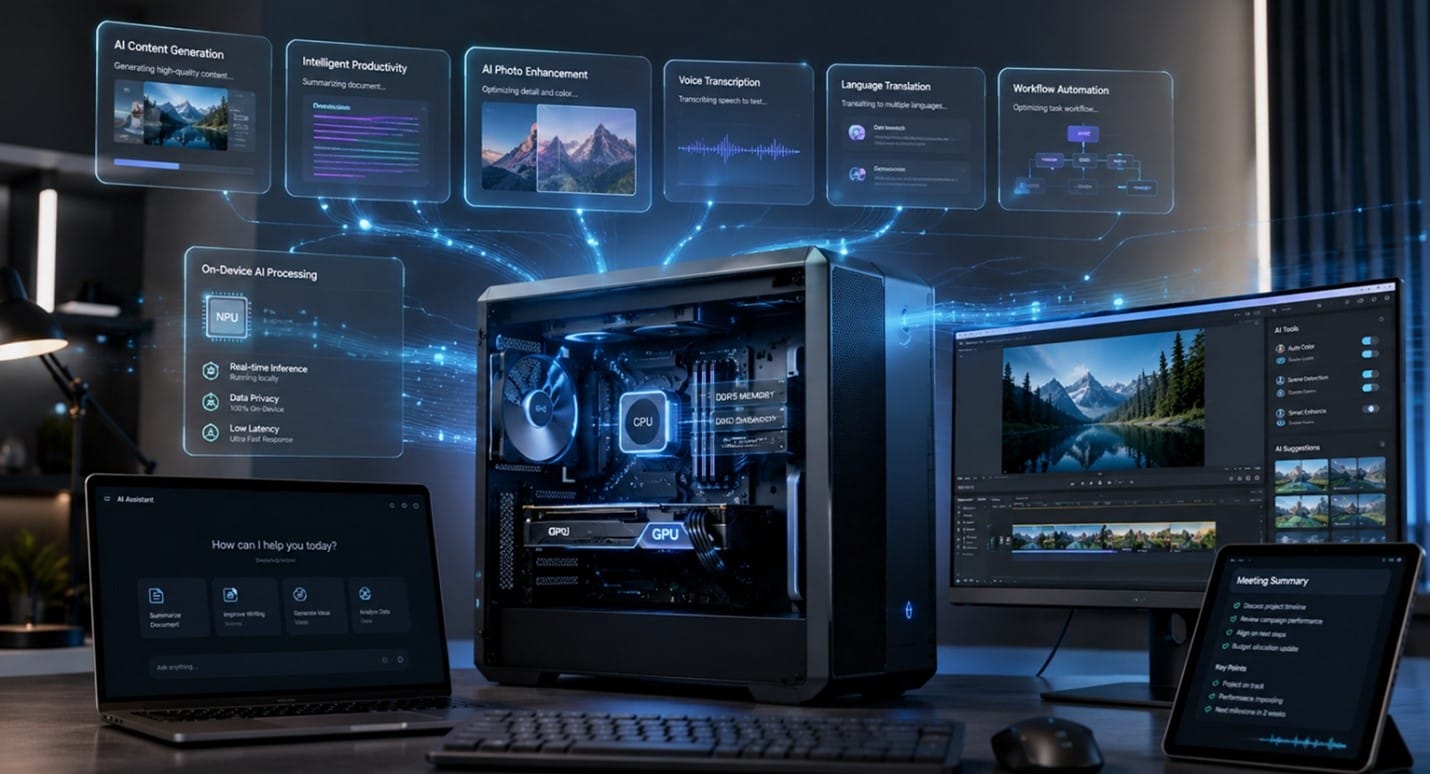
Artificial Intelligence is no longer confined to cloud servers or advanced research labs. It is becoming a major part of everyday computing, and the next generation of laptops and desktops is being designed with this shift in mind. From smarter productivity features to real time content creation, AI powered technology is already influencing how modern computers are built, purchased, and used.
Major technology companies such as Intel, AMD, and Microsoft are investing heavily in what the industry now refers to as AI PCs. These systems are specifically designed to handle artificial intelligence tasks more efficiently and deliver better performance for modern applications.
As AI becomes more integrated into software and operating systems, many users are beginning to wonder what actually makes an AI PC different and whether upgrading to one is truly necessary right now.
What Is an AI PC?
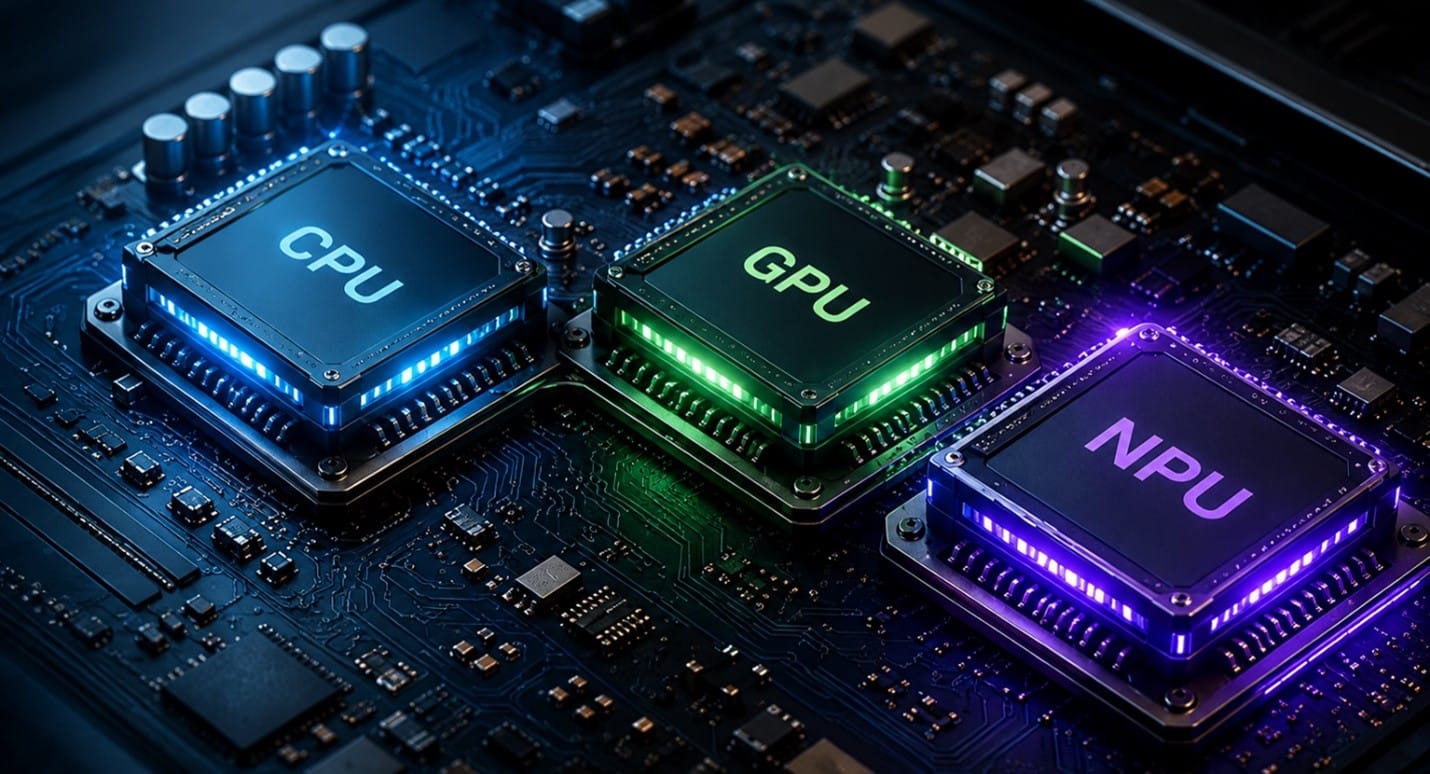
Traditional computers mainly rely on two key components:
- The CPU (Central Processing Unit) for general tasks
- The GPU (Graphics Processing Unit) for graphics and heavy parallel workloads
AI PCs introduce another dedicated component called an NPU (Neural Processing Unit). These processors are specifically designed to accelerate AI-related tasks while using less power than standard CPUs or GPUs.
This allows computers to handle AI features directly on the device rather than constantly relying on cloud-based servers.
- Real-time language translation
- Voice recognition and transcription
- AI image generation
- Smart photo editing
- Background noise removal during video calls
- AI-assisted search and productivity tools
- Automatic content summarisation
- Intelligent battery and performance optimisation
Instead of sending every request to the internet, many of these tasks can now run locally on the machine itself.
Why Hardware Manufacturers Are Investing So Heavily in AI
The rapid growth of AI software has created strong demand for hardware that can process artificial intelligence tasks quickly and efficiently in real time. As modern applications become more advanced, AI features are increasingly being integrated into everyday workflows, from productivity tools and video conferencing to creative software and automation systems. This shift is pushing hardware manufacturers to redesign computers around AI focused performance rather than relying solely on traditional processing power.
For companies like Intel, AMD, and Microsoft, AI PCs represent the next major evolution in computing, much like the transition from HDDs to SSDs or the rise of high refresh rate displays. Modern AI ready systems are being built to improve power efficiency, multitasking, battery life, local AI processing speed, security monitoring, and overall responsiveness. This is particularly important for laptops, where balancing performance and efficiency has become a key priority for both businesses and everyday users.
How AI PCs Could Benefit Businesses
Businesses are likely to see some of the biggest advantages from AI-integrated hardware over the next few years.
AI-assisted systems can help automate repetitive office tasks, improve workflow efficiency, and support smarter data handling. Video conferencing tools are already using AI for live captions, noise cancellation, and camera tracking, while productivity applications increasingly rely on AI-generated suggestions and automation.
For creative professionals, AI acceleration can also improve tasks such as:
- Video editing
- Graphic design
- 3D rendering
- Content generation
- Photo enhancement
- Large data analysis
As more software platforms adopt built-in AI features, systems without dedicated AI acceleration may eventually struggle to keep up with newer workloads.
What This Means for Everyday Users
For most everyday users, the impact of AI PCs may feel gradual at first rather than revolutionary overnight. Basic tasks like web browsing, streaming, and office work will still function much the same, but users are likely to notice improvements in system responsiveness, battery management, smarter software features, and overall performance efficiency.
As AI becomes more deeply integrated into operating systems such as Windows, many tasks that currently require separate applications may eventually become built directly into the user experience. Instead of manually managing everything, computers will increasingly assist users automatically in the background.
Some of the practical AI features users may begin seeing more often include:
- Automatic file organisation and smarter search functions
- AI powered document summarisation
- Smarter email management and writing assistance
- Improved online meetings with noise removal and live captions
- AI assisted content creation and editing tools
- Better accessibility features for users with different needs
- Real time translation and voice recognition
- Smarter battery and performance optimisation
Over time, computers are expected to become more personalised, more efficient, and better at adapting to how individual users work and interact with technology.
Should You Upgrade to an AI PC Right Now?
Not everyone needs to upgrade to an AI PC immediately. While AI ready hardware is clearly becoming an important part of the future of computing, many current systems are still more than capable of handling everyday tasks without any issues. An upgrade is most beneficial for users who regularly work with creative software, AI powered applications, video editing, heavy multitasking, development work, or large amounts of data. However, if your current computer already performs well for your daily needs, upgrading purely because of AI marketing may not provide significant real world benefits just yet.
The Future of Computing Is Clearly Shifting
AI is quickly becoming integrated into both software and hardware ecosystems. Over the next few years, AI acceleration will likely become a standard feature across most new consumer and business computers.
Much like SSDs, Wi-Fi 6, or dedicated graphics once seemed optional before becoming mainstream, AI-focused hardware is gradually moving toward becoming a normal expectation rather than a premium feature.
The key is understanding which upgrades provide practical benefits — and which are simply driven by marketing trends.
At Focus PC, we help users and businesses make smarter technology decisions based on real-world performance needs, long-term value, and practical everyday use — not just industry hype.